Training a Cat to Use the Litter Box Again
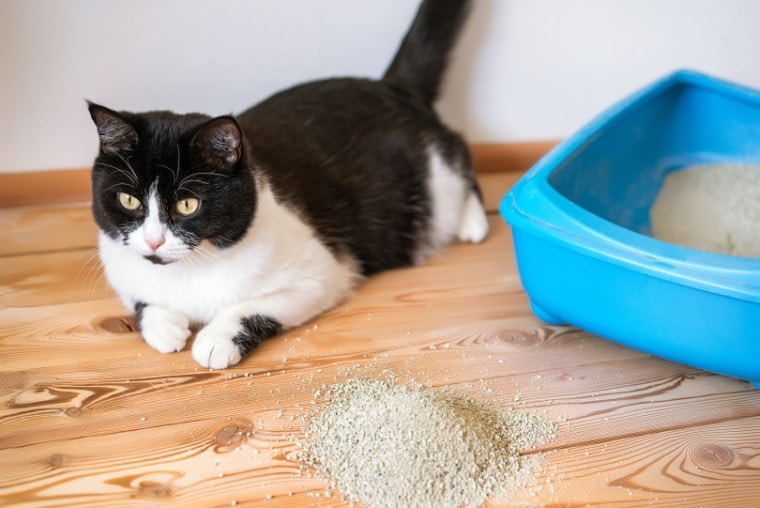
Litterbox problems are amidst the nigh common—and frustrating—cat behavior problems for owners. Information technology can be challenging when your true cat eliminates exterior of the box. The first step in retraining your cat to use the litterbox is to empathize why your cat is going outside the box in the offset place.

Why Do Cats Stop Using the Litterbox?
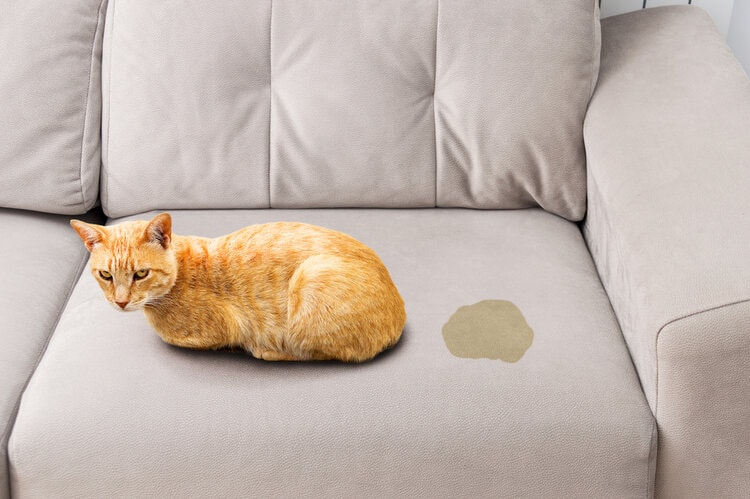
There are many reasons why a true cat might stop using the litterbox. The most important things to rule out are whatsoever potential health problems like constipation or urinary tract issues.
Exist sure to see your vet if your cat is showing signs of hurting or distress. Untreated urinary crystals or stones tin can atomic number 82 to life-threatening blockages, particularly in male cats.
In one case you rule out physical causes, the problem may be very simple and easy to solve.
Reasons cats start going outside of the box:
- Your cat dislikes a new brand or type of litter
- A ascendant cat bullies a submissive cat in the box area
- The litterbox is non cleaned oft enough
- Your cat doesn't experience comfortable going where you placed the box
- You have a multi-cat dwelling with not enough litter boxes per cat
- A large true cat (like a Maine Coon) has outgrown a standard size box
Observe your cat's litterbox behavior closely. Later on you've identified the nigh likely cause, how exercise y'all retrain your true cat to begin using the box again?

The 9 Easy Steps to Retrain a Cat to Employ the Litterbox
Earlier You Offset
Keep in mind that the problem, even as you work to solve information technology, might accept caused your cat to develop negative associations with using the box.
Punishing or yelling at your cat for going outside the box can brand those bad feelings worse, so avoid any negative reinforcements when accidents occur.
The fundamental to retraining your cat to use the litterbox over again is to change those negative feelings into positive ones. Here's how to make using the box comfortable again.
i. Find the right litterbox for your cat
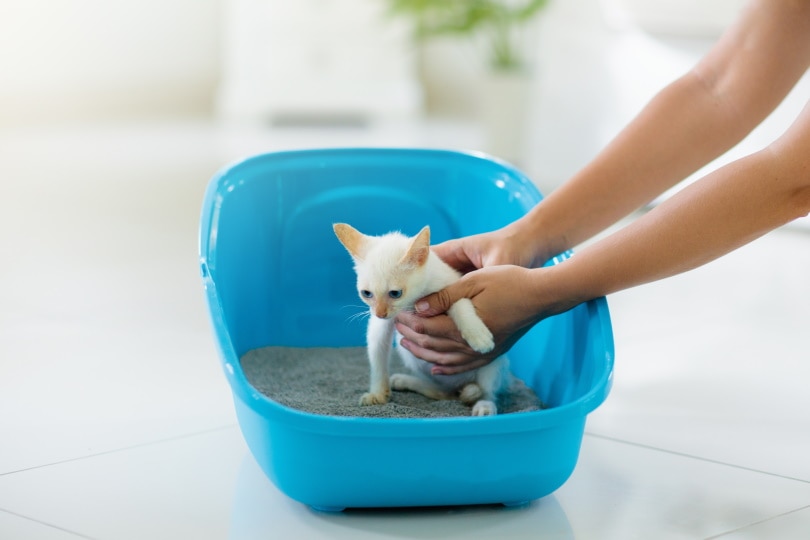
A litterbox should be 1½ times the length of your true cat, measured from the olfactory organ to the base of the tail. Large cats demand big boxes. For kittens and senior cats, the sides demand to be low enough for easy access.
Have yous switched from an open box to a closed box? Did yous go a cocky-cleaning box recently? Your cat may adopt one box way over another.
And nigh importantly, become multiple litterboxes for a multi-cat household. One box per cat plus one extra is ideal.
2. Find the right litter for your cat
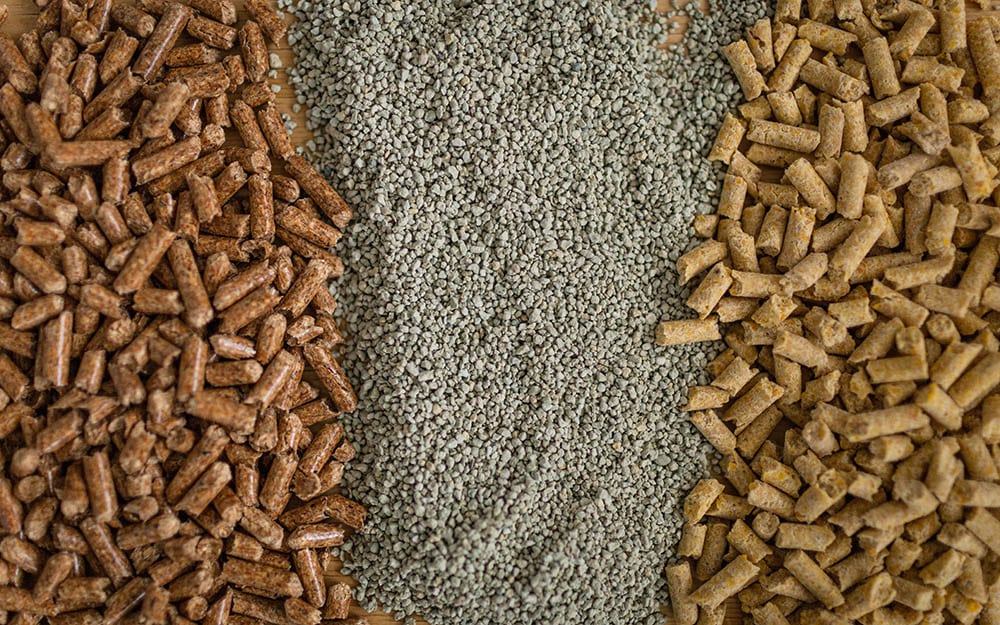
There are many dissimilar types of kitty litter. Litter can be made from materials like clay, wood pellets, silica crystals, recycled newspaper pellets, walnut shells, and coconut husks, only to name a few.
Your preferred type of litter may not be your cat's favorite. Sometimes a cat volition develop an aversion to the texture of a item kind of litter and adopt other surfaces like the carpet or a tile floor.
You may have to experiment and buy small containers of different types of litter until y'all detect the right one. Every cat is an individual, merely generally, cats prefer the experience of soft, finely textured litter.
Once y'all find the right litter, remember not to overfill or underfill the box. Too much or too trivial litter can sometimes be an upshot.
iii. Place the litterbox in a good spot
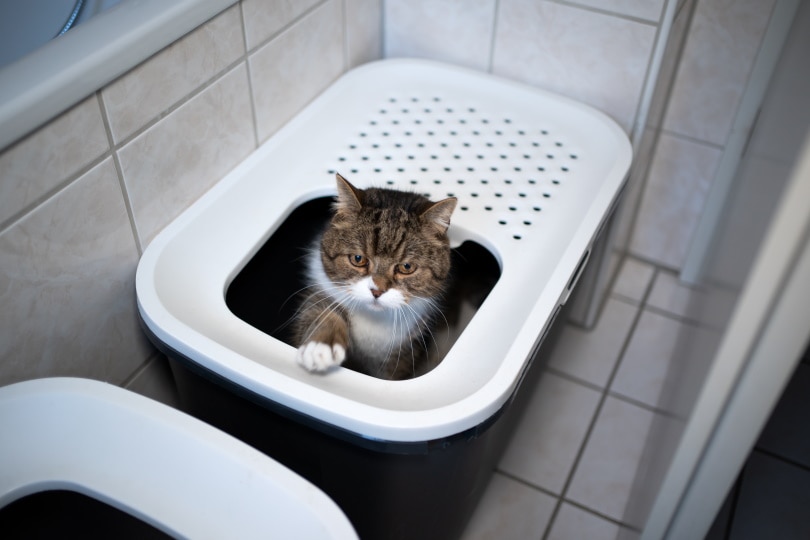
Litterbox placement can be an issue for a shy cat in a busy, multi-pet household. If your cat is timid, put the box in an easily accessible but quiet place, away from heavily trafficked and noisy areas.
Avoid placing the box in an area where your cat will feel trapped or cornered if approached. Nearly cats similar to see who'southward coming and how they can escape if they feel uncomfortable.
Good litterbox placement spots tin can include a basement or spare bathroom or bedroom. Bad litterbox places tend to exist heavily used areas similar the kitchen.
4. Go on the litterbox very clean
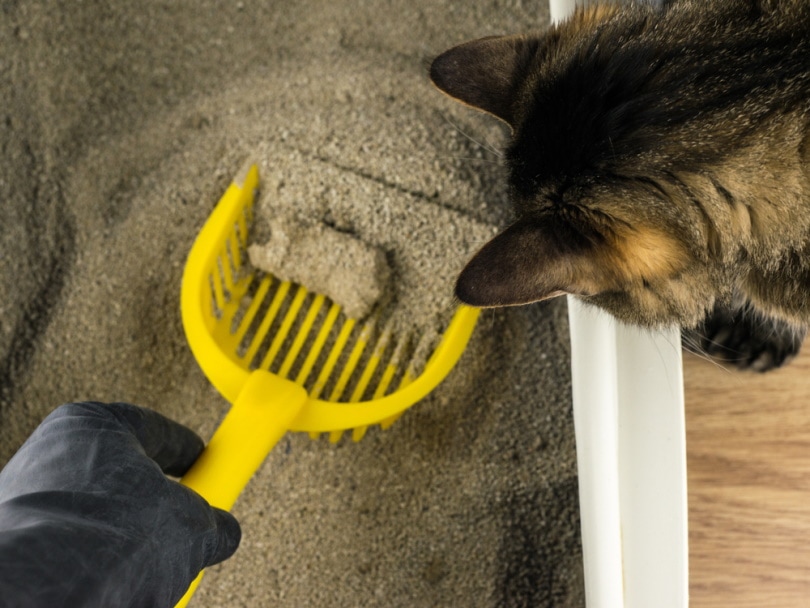
Not surprisingly, cats adopt clean litterboxes over dirty litterboxes. Cleaning the litterbox is not a fun task, but it is essential, particularly when your cat has litterbox bug.
Scoop out the poop and solid clumps (if yous employ clumping litter) at least in one case per day. You can wipe downward the sides if they are messy too.
Change the litter out completely at least in one case per calendar week, merely more frequently if necessary.
Wash out the litterbox one time every week using lather and water. Avoid harsh smelling cleaning agents like ammonia.
Be aware that many cats exercise not like the feel of litterbox liners, so it's best not to use them.
5. Resolve conflicts between multiple cats
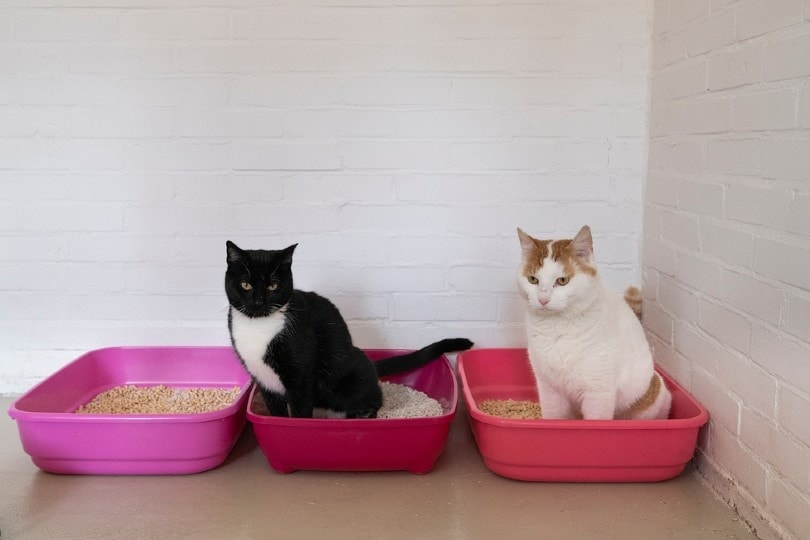
It's very common in multi-cat households for one cat to be dominant and another to be submissive. Unfortunately, these power issues can result in skirmishes at the litterbox and nutrient bowls.
One of your cats may be getting bullied or ambushed at the box. If this is the case, put a secondary box in the identify where the shy cat likes to spend fourth dimension.
Separation of litterboxes, nutrient and water bowls, and favorite sleeping spots tin can be helpful in homes where there is a conflict between cats.
six. Effort stress-relieving pheromones

In that location is some debate nigh the effectiveness of calming agents like pheromones or essential oils. Some owners swear by them, others accept seen footling effect.
Y'all can try stress-relieving pheromone sprays or diffusers in the litterbox surface area. The idea behind pheromones is that they replicate the comforting natural substance that cats excrete when they rub their faces on things.
Essential oils that are said to be effective in calming cats include lavender, chamomile, geranium, and frankincense. Be sure to talk to your vet showtime and utilise whatsoever essential oil production with intendance, as many oils are toxic to cats.
7. Thoroughly make clean areas your true cat has previously soiled
It'south not uncommon for cats to return to a identify in the home that they have soiled earlier. You can discourage this by removing any trace of the smell.
The best style to do this is with an enzymatic cleaner. Enzymatic cleaners are specially effective in cleaning urine. They pause down the uric acid into different components which then evaporate.
Other types of cleaners may seem to the states similar they clean and deodorize well, simply your cat's sensitive nose will even so detect the urine.
8. Know the difference between urine mark and going outside the box

Your cat volition squat when urinating outside the box; a cat that aroma marks his territory will stand with his tail high and spray behind him.
Urine mark is non the aforementioned as eliminating exterior of the box. The all-time solution for marking is to spay and neuter all your cats. You tin also use some of the aforementioned techniques we mentioned to solve conflicts between cats.
9. If all else fails, seek professional advice
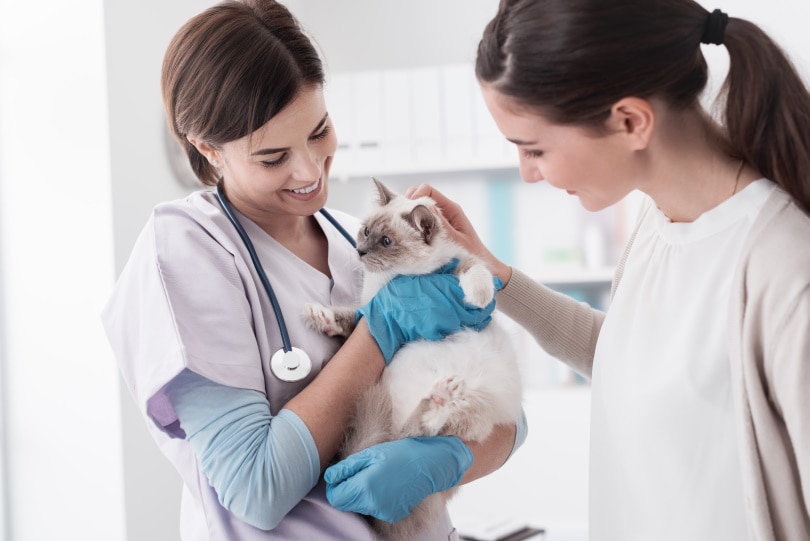
Sometimes a true cat'southward litterbox and other behavioral problems can be tough to solve. Don't be shy almost talking to your vet or an brute behaviorist.
Your vet can prescribe medications for severe anxiety that may be contributing to your true cat'southward litterbox issues. In that location are a diverseness of different drugs that you can try.
An brute behavior good has training and experience in behavior modification techniques and can aid you to amend sympathize and piece of work with your cat.
Wait for Certified Applied Animal Behaviorists (CAABs) and Associate Certified Applied Fauna Behaviorists (ACAABs), as they have advanced training in animal behavior, biological science, and wellness.
Featured Image Credit: Tanya-Plotnikova, Shutterstock
Source: https://petkeen.com/how-to-retrain-cat-to-use-litterbox/
0 Response to "Training a Cat to Use the Litter Box Again"
Post a Comment